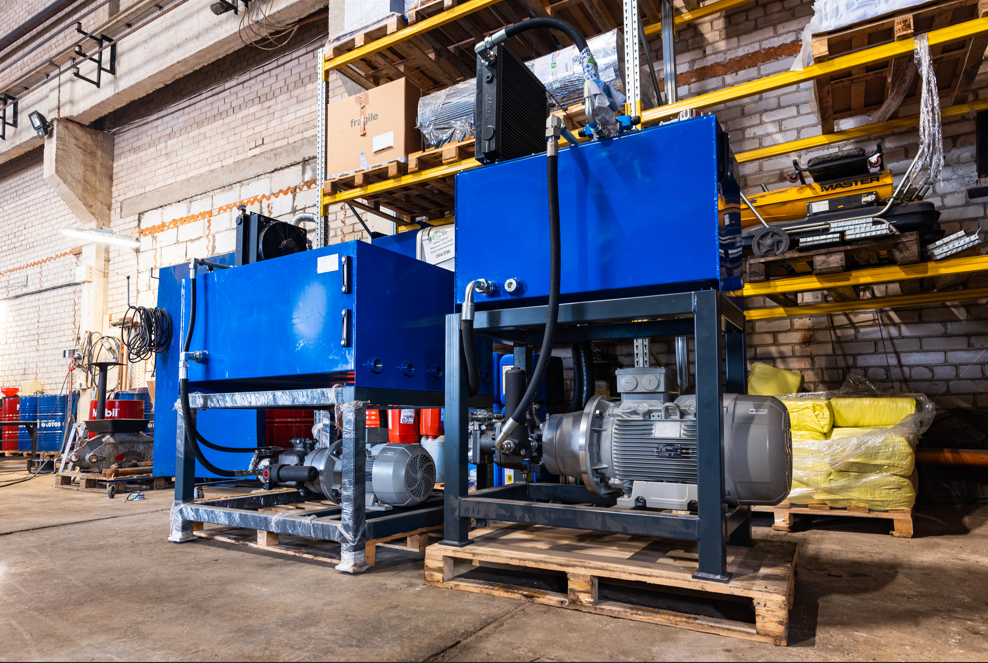

What are hydraulic pumps?
Hydraulic pumps are powerful devices widely used in industrial applications. Simply put, the purpose of these pumps is to generate vacuum. Thanks to their high suction capacity, hydraulic pumps remove gas and air molecules from enclosed containers, thereby creating a vacuum—although, technically speaking, this is closer to a partial vacuum. In essence, hydraulic pumps do not “pull” gases but rather push gas molecules, transferring them from one location to another. By alternating between high- and low-pressure states, a vacuum is created. Due to these characteristics, hydraulic pumps also enable the movement of fluids from one place to another.
Such equipment is particularly valuable in construction, agriculture, transportation, road building, municipal services, engineering, and manufacturing industries.
Hydraulic pumps can be classified as dry or wet. Dry pumps use PTFE dry lubricant instead of water or oil; this lubricant is essentially a fine powder that functions as a dry lubricating agent. This solution is beneficial because it reduces the risk of contamination, as the diaphragm inside the pump prevents gases from entering the pump mechanism. Wet hydraulic pumps, on the other hand, are lubricated with water or oil. They typically offer lower energy consumption, more efficient power distribution, and greater resistance to temperature fluctuations and water contamination.
Hydraulic pump diagnostics
Hydraulic pumps enable tasks that other types of equipment cannot perform. By using the force of pressurized fluid, pumps operate under heavy loads and are therefore prone to contamination and mechanical failure. Common failures include the motor, safety valves, control valves, or accumulators. Various technical issues can reduce performance and functionality and, in some cases, pose risks to people and the environment. For example, a ruptured high-pressure hose may result in oil leakage. Therefore, to avoid potential risks and ensure optimal performance, hydraulic pump diagnostics must be carried out regularly and thoroughly.
When testing pump functionality, several diagnostic methods and tools are used to ensure a comprehensive analysis of the equipment. Some of the most common tools include:
Pressure gauge (manometer)
A pressure gauge measures the force exerted by fluid within the hydraulic system. It is one of the simplest ways to assess pump condition, efficiency, and potential leakage. If pressure readings deviate from specified values, further testing is performed to determine the root cause of the problem.
Flow meter (anemometer)
A flow meter measures the volume or speed of fluid flowing through the hydraulic system. This allows evaluation of pump and motor power, performance, and displacement. If the flow rate does not meet specified limits, wear, blockages, or other defects may be suspected.
Temperature sensors
Temperature sensors are another important diagnostic tool used in hydraulic systems. They measure the heat generated or transferred by the hydraulic fluid. Temperatures can be monitored at pump or motor inlet and outlet ports, as well as other system locations. Excessive or abnormal temperatures indicate the need to investigate underlying issues.
Sound level meters
Sound level meters, also known as noise meters, help determine the noise level and intensity generated by the hydraulic system. Unusual noise may indicate problems such as friction, vibration, cavitation, or aeration.
Hydraulic system diagnostic software
With advances in technology, hydraulic systems can also be tested using dedicated computer software. Such software collects data from various system sensors and analyzes it. It enables testing of pressure, noise, flow rate, power, temperature, torque, speed, and efficiency. The software generates reports and charts that significantly speed up and simplify the diagnostic process.
Hydraulic pump repair
The tools and techniques mentioned above help identify faults or damage within hydraulic systems. Even if the current condition or functionality of a hydraulic system is not yet affected, early fault detection and repair are essential as a preventive measure to reduce potential risks during operation.
Serious failures most commonly occur in older, out-of-warranty hydraulic pumps that have exhausted their service life and have been subjected to heavy-duty operation. In addition, improper or insufficient maintenance often leads to various types of failures, highlighting the importance of proper maintenance in maintaining system functionality.
Most common causes of failures
-
Insufficient maintenance: Irregular system cleaning or filter replacement, oil changes not performed according to recommendations, unresolved leaks, and delayed diagnostics of operating parameters.
-
Incorrect hydraulic oil: If the selected oil does not match the operating conditions, it can contaminate the system and cause failures.
-
Components not meeting specified parameters: Incorrectly selected filter elements, high-pressure hoses, or hydraulic units can negatively affect overall system performance.
-
Improper adjustment: Incorrectly adjusted pump regulators, valves, or pressure sensors can cause hydraulic system malfunctions and eventually lead to damage.
Most common hydraulic system failures
Contamination
Since hydraulic pumps operate in a wide range of environments, various contaminants such as dirt, dust, or debris can enter the system along with the fluid. These contaminants clog pump filters and reduce suction efficiency. Chemical and gaseous contamination can also cause internal component damage and corrosion. Filters that are not cleaned or replaced in time may ultimately lead to system overheating and motor failure.
Wear
Over time and under heavy operating loads, hydraulic pumps—like any mechanical equipment—inevitably wear out. Certain components are often the first to wear, such as pump vanes, seals, or gaskets. Worn vanes generate noise and reduce pump capacity, while damaged seals cause leaks that negatively affect vacuum pressure and overall system performance.
Overheating
Hydraulic or vacuum pumps most commonly overheat due to insufficient or improper lubrication, typically caused by a lack of oil. In inadequately lubricated pumps, friction develops in bearings and other continuously moving parts, eventually generating excessive heat. Overheating may also result from excessive load or prolonged operation at high capacity.
Incorrect installation
If a hydraulic pump is installed incorrectly or if installed components do not comply with the manufacturer’s recommendations and specifications, the pump may wear prematurely—even before the warranty period expires. Improper installation of inlet and outlet connections can also cause air leaks, which are critical for maintaining proper pressure levels.
Hydraulic pump maintenance
Like all technical equipment, hydraulic pumps require proper maintenance and regular inspections. To ensure that hydraulic systems operate at full capacity and have a long service life, even minor changes in pump performance or early signs of malfunction should be addressed immediately by visiting our service center. Hydraulic pump repair in Kaunas, Domeikava, helps identify the exact cause of the problem and, when necessary, replace worn or damaged pump components, perform internal cleaning, adjust pressure settings, and reassemble the hydraulic pump in accordance with the manufacturer’s instructions.
When it comes to daily hydraulic system maintenance, it can be ensured by following a few basic rules:
-
Replace hydraulic oil on time. Oil service life depends not only on operating hours but also on its composition. Oil properties may change due to temperature fluctuations, high pressure, and other operating conditions.
-
Replace filters on time. Timely filter replacement helps maintain oil quality and ensures proper operation of other system components.
-
Maintain proper operating temperature. In general, a hydraulic system should operate at a recommended temperature range of 50–70 °C. However, temperature requirements may vary depending on the system, so it is important to follow the manufacturer’s recommendations.