
Seals and Their Types
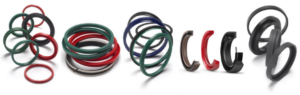
Hydraulic seals are specialized components used in hydraulic equipment to ensure that fluids or gases remain sealed and do not leak from the system. They also help prevent contaminants from entering the system. Hydraulic seals are essential for maintaining efficient and reliable operation of hydraulic systems.
Main types of hydraulic seals:
-
Piston seals – used to seal the piston inside the cylinder, ensuring tight sealing between the piston and the cylinder wall. Typically made from polyurethane, rubber, or thermoplastic materials.
-
Rod seals – seal moving rods, preventing hydraulic fluid from leaking out of the cylinder.
-
Wipers (dust seals) – protect the system from contaminants by cleaning rods or other moving parts as they retract into the system.
-
Dynamic seals – used to seal moving components, such as between rotating or linearly moving surfaces.
-
Static seals – seal non-moving components (e.g., between connecting flanges).
-
Combined seals – integrate multiple functions into a single seal, such as sealing, guiding, and wiping.
Needs Analysis and Design
Seal manufacturing begins with a thorough understanding of customer requirements. Each hydraulic system has specific demands depending on its operating conditions:
-
Pressure range: Seals must withstand high pressure (up to 700 bar or more) without leakage.
-
Temperature variations: Operating temperatures may range from very low (–40 °C) to extremely high (200 °C or more).
-
Operating environment: Seals must be resistant to chemicals, corrosion, wear, and ultraviolet radiation.
During the design phase, the following aspects are considered:
-
Seal geometry (O-rings, U-cups, V-rings, and custom designs).
-
Function (piston, rod, static, or dynamic seals).
-
Material elasticity, resistance, and durability.
Material Selection
Material selection is a critical stage in hydraulic seal manufacturing, as the correct material ensures durability and reliable performance under extreme operating conditions.
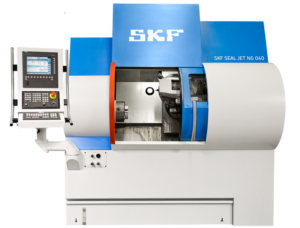
Using SKF CNC seal turning machines Seal Jet DD and Seal Jet NG 040, we manufacture high-quality sealing products of various profiles, as well as guide rings and bushings. The manufacturing process includes the following steps:
Design preparation and programming
The seal type is defined and the appropriate profile is selected. All seal dimensions are carefully measured and programmed into the system.
Material preparation
Special raw material blanks made from the selected material are used with SKF CNC machines. These blanks are prepared according to the required seal type.
CNC machining
SKF CNC machines precisely shape the blank according to specified parameters. The following processes are performed:
-
Cutting: Removal of excess material to achieve the required seal shape.
-
Turning: Machining of seal edges, surfaces, and internal grooves.
-
Drilling: Creation of internal cavities or holes.
-
Profile forming: Formation of specific grooves required for certain seal types (e.g., U-cups or V-rings).
Surface finishing
SKF seal turning machines ensure an exceptionally smooth surface finish, reducing friction and enhancing seal longevity. If required, additional surface treatments may be applied to improve wear resistance or chemical resistance.
Quality control
Manufactured seals are thoroughly inspected using precision measuring equipment to ensure dimensional accuracy and correct geometry.
Elastomers:
-
Nitrile rubber (NBR): Resistant to oils and suitable for standard operating temperatures.
-
Fluoroelastomers (FKM/Viton): Resistant to high temperatures and aggressive chemical environments.
-
Silicone: Used for low-temperature applications.
Thermoplastics:
-
Polyurethane (PU): Highly wear-resistant and suitable for dynamic systems.
-
Polytetrafluoroethylene (PTFE): Resistant to high pressure and chemical exposure.
Composites and metals:
-
Metal inserts are used to provide additional strength and structural stability.
Materials are selected based on operating conditions, pressure, friction, chemical exposure, and temperature requirements.
Manufacturing Process
Seal Manufacturing Process Using SKF Seal Turning Machines
Using SKF CNC seal turning machines Seal Jet DD and Seal Jet NG 040, we manufacture high-quality sealing products of various profiles, as well as guide rings and bushings. The manufacturing process includes the following steps:
Design preparation and programming
The seal type is defined and the appropriate profile is selected. All seal dimensions are carefully measured and programmed into the system.
Material preparation
Special raw material blanks made from the selected material are used with SKF CNC machines. These blanks are prepared according to the required seal type.
CNC machining
SKF CNC machines precisely shape the blank according to specified parameters. The following processes are performed:
-
Cutting: Removal of excess material to achieve the required seal shape.
-
Turning: Machining of seal edges, surfaces, and internal grooves.
-
Drilling: Creation of internal cavities or holes.
-
Profile forming: Formation of specific grooves required for certain seal types (e.g., U-cups or V-rings).
Surface finishing
SKF seal turning machines ensure an exceptionally smooth surface finish, reducing friction and enhancing seal longevity. If required, additional surface treatments may be applied to improve wear resistance or chemical resistance.
Quality control
Manufactured seals are thoroughly inspected using precision measuring equipment to ensure that their dimensions and geometry precisely meet the specified requirements.